

Leveraging Data and Insights to Prevent Inventory Dilemmas
Systems are inextricably linked to business operations, but do we understand how they work? As consumer brands strive to stay ahead in a competitive market, a deep understanding of the retailer’s demand forecasting data becomes paramount. Imagine a forecast analyst attempting to predict future demand without fully grasping the nuances of the retailer’s replenishment system that generates purchase orders based on this data. Without this critical insight, how can they accurately identify anomalies and overrides that could impact the bottom line? The ability to decode these complex forecasting systems empowers analysts to make informed decisions and uncovers hidden opportunities for optimization and growth. In an era where data-driven strategies reign supreme, mastering the intricacies of these operational systems is no longer a luxury but a necessity.
This article will dives into the inner workings of retailer demand forecasting systems and demonstrate how brands can actively monitor the outputs to prevent inventory issues and become better retail partners.
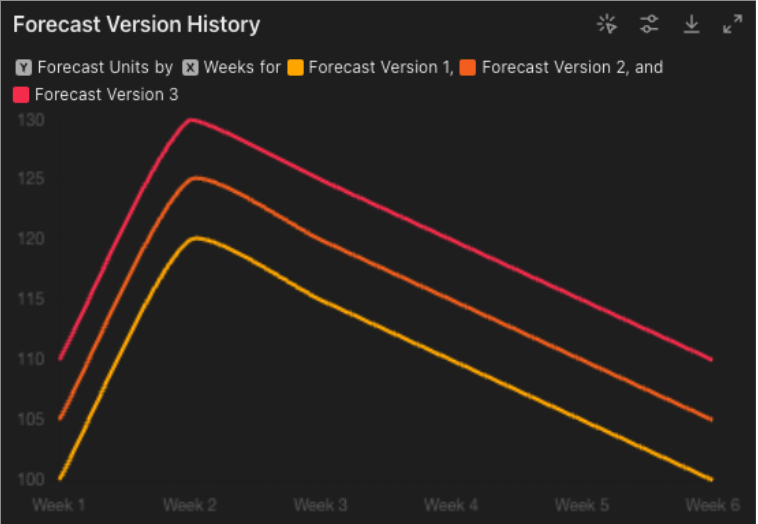
Version History of Future Periods
Given that each forecast is regenerated weekly, a brand gains multiple insights into how future periods might unfold. This frequent update cycle allows for continuous refinement of predictions, providing a dynamic view of demand. If an item is gaining momentum, these weekly forecasts can reveal directional trends, highlighting shifts in consumer interest and buying behavior. By closely monitoring these evolving trends, brands can respond more swiftly to market changes, adjust their strategies, and ensure they are well-prepared to meet increasing demand. This proactive approach not only helps in capitalizing on emerging opportunities but also in mitigating potential risks associated with rapid changes in the market.
Monitoring Sudden Demand Drops on the SKU Level
In addition to uncovering general trends, brands can leverage demand forecasts to identify when items anomalistically drop out of the dataset. This should be treated as a “code red” scenario, demanding immediate attention and swift action. Such anomalies might indicate that an item has temporarily gone out of stock, causing the demand models to lose their signal. However, it could signal deeper, systematic issues requiring urgent communication with your retailer counterpart. Promptly triaging these anomalies allows brands to address potential stockouts, adjust their inventory strategies, and ensure that no sales opportunities are lost. By staying vigilant and responsive to these critical signals, brands can maintain a robust supply chain and strengthen their market position.

Flagging Items with Major OOS Periods from Last Year
When an item goes out of stock in year one, it creates a critical gap in the sales data that demand planning tools rely on to forecast future demand. This missing data distorts the accuracy of predictions for year two, as the tools cannot account for the unmet demand due to the stockout. Consequently, planners might underestimate the demand, resulting in potential understocking issues in the subsequent year.

Final Thoughts
In the fast-paced world of consumer goods, a profound understanding of the systems that drive business operations is crucial for staying competitive. Retailer demand forecasting systems are pivotal in shaping inventory strategies and ensuring that the right products are available when needed. By leveraging these systems’ detailed data, brands can gain insights into future demand, monitor for sudden SKU drops, and flag items with significant out-of-stock periods from the previous year.
Krunchbox can help brands navigate these complexities with ease. By offering advanced data analytics and business intelligence solutions, Krunchbox empowers brands to actively engage with demand planning data, quickly identify anomalies, and adjust real-time strategies. Their tools facilitate effective communication with retail partners, ensuring a proactive approach to preventing inventory issues and unlocking hidden opportunities for growth and optimization.
As data-driven strategies continue to dominate, mastering these intricate systems with the support of SaaS data providers is essential for making informed decisions and maintaining a robust supply chain. Brands that invest in understanding and utilizing retail sales and inventory data and that employ analytical tools such as Krunchbox will be better positioned to thrive in a dynamic market landscape.
with your own data